
The focus will be on tackling the unfinished agenda requiring immediate attention like tax structure for solar projects, uniform tax rate on state-organised and state-authorised lotteries, taxing non-potable alcohol besides certain changes in the law, extension for NAA and rate rationalisation.
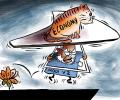
There is talk of a fresh approach to a new labour code as well as reforming land acquisition laws in such a way as to be politically.

The RBI is understood to be dithering since it would want more clarity on the cost of the fiscal policies the new government would undertake before it decides to cut rates, even though it has pencilled in a lower gross domestic product growth rate for this fiscal year.

The rates of price rise in many services used by the common man, including hospital and nursing, cook, domestic help and bus (fare), among others, have also touched double digits during the last four years, putting a burden on disposable income.

Infrastructure projects were the top picks for MPs, with 40% of the total funds spent on the development of railways, roadways, pathways and bridges.

CBDT feels 30% growth in income-tax not feasible.

The Modi government has handled inflation far better than any government in the past two decades. Both the stock market and currency indices have begun to show confidence in the economy, despite the mounting global headwinds of trade.

The direct tax collections are likely to fall short of the revised Budget target by Rs 650 billion and, in fact, were Rs 150 billion lower than the original estimate for the fiscal

The results are likely to please the Indian government, which has been trying to impress on domestic and foreign investors about its efforts to improve the ease of doing business.

With the two members quitting, the NSC now has only two members -- Chief Statistician Pravin Srivastava and NITI Aayog CEO Amitabh Kant.
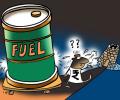
The country must get its act on global alliances right in order to feed its fuel-hungry economy, points out Subhomoy Bhattacharjee.

The government is buying out the shares of India Ports Global, which are now held in a 60-40 ratio by the JNPT and Deendayal Port Trust in Kandla.

Has the Modi government been more at odds with institutions than other governments? There is no doubt that there have been more run-ins. While the RBI and CBI cases have drawn attention, there have been others, less publicised, Subhomoy Bhattacharjee points out.
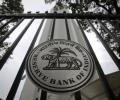
The differences revolved around the two topics of how much reserves the RBI should carry and whether the finance ministry had precipitated matters by invoking Section 7 of the RBI Act, that allows it to give directions to the RBI in public interest.

Two successive reports, one by Percy Mistry in 2007 and the other by Raghuram Rajan in 2008 had provided the RBI and the finance ministry with blueprints of what to do next. Both reports, unfortunately, was put on ice. The global meltdown saved the RBI. It also saved the finance ministry from having to work on the two reports.

It would be difficult to stick to the Budget numbers unless the departments are reined in their expenditure plans.

Direct tax collections grew by a meagre 6.6 per cent during April-July of the current financial year against the Budget target of 14.4 per cent for 2018-19. Corporation taxes, in particular, grew at just 0.57 per cent, the lowest in the first four months in at least seven years.

The deposit has been made on account of the rate reductions approved by the GST Council in its November. The rate was reduced on items including shampoo, detergents, chocolates, beauty products, sanitary ware, leather clothing, cookers, stoves, after-shave, deodorant, detergent and washing power. Companies found it difficult to pass on the benefits to consumers immediately at the time of GST rate reduction owing to logistical issues.

At its heart, the issue is more than compliance. It is the risk of possible breakdown of a strong nexus between insurance firms and motor car dealers that makes the business the top earner for the former.

Since its rollout 13 months ago, the new indirect tax has yielded Rs 1 trillion only in in April 2018
 © 2026 Rediff.com - Investor Information - Advertise with us - Disclaimer - Privacy Policy - Sitemap - Feedback - About us - Terms of use - Grievances